Hail Damage on Siding: What to Look For After a Kansas Storm
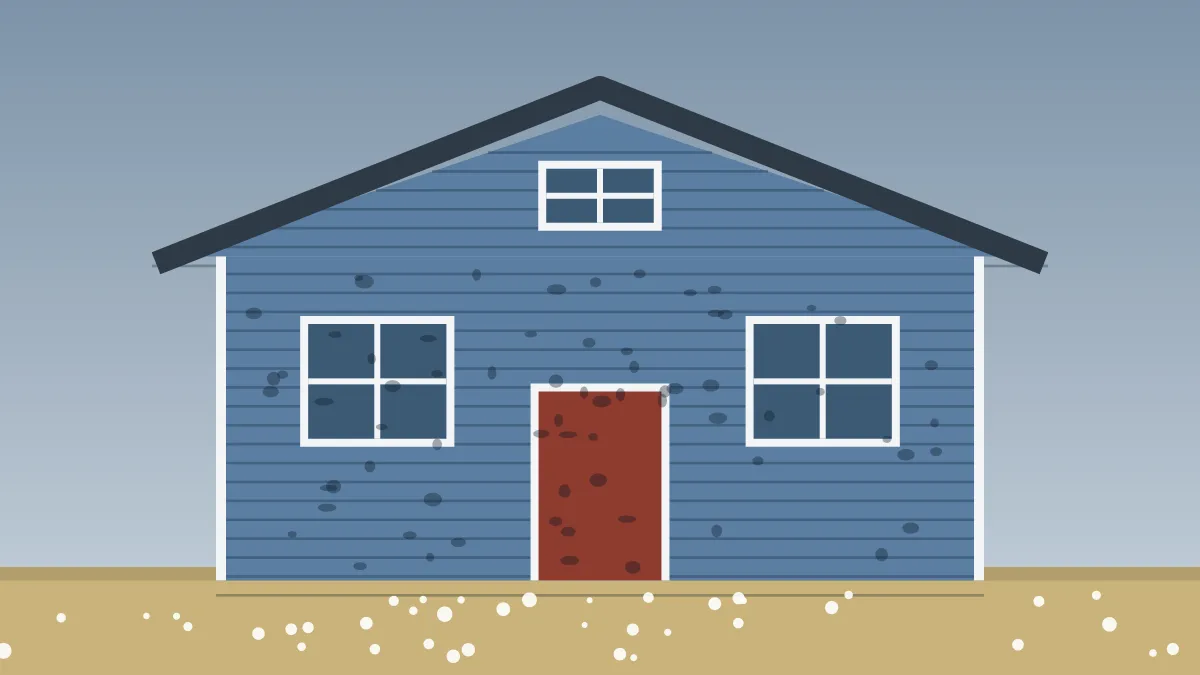
After a hailstorm, start with the side of the house that faced the storm. Walk it slowly, look closely at the siding in low, angled light, and take photos of anything that looks new: cracks, holes, dents or chipped paint. Then call your insurance agent before you fix anything permanently. Hail damage is easy to miss from the driveway, and a few minutes of looking now can make your claim much easier later.
Where to look first
Hail rarely hits every wall the same. Most of the damage usually lands on the side the storm came from, so check that side first, then walk all the way around.
- Siding on the storm side. Look at eye level and below, where you can see details up close.
- Corners and trim. Corner posts, window trim and the boards along the bottom of the wall take a beating.
- Windows and screens. Look for cracked glass and torn screens.
- Gutters, downspouts and the air conditioner. Fresh dents in soft metal are a quick sign that hail was big enough to damage the house.
- Decks and fences. Fresh gouges in wood can show which way the storm came from.
Stay off the roof. It's dangerous, and a roofing pro or your insurance adjuster can check it safely.
What hail damage looks like on each type of siding
Vinyl siding
Vinyl usually doesn't dent. It cracks, splits or gets punched through. Look for small round or star-shaped holes, cracks running along the bottom edge of a panel, and broken corners. Older vinyl gets more brittle, and cold vinyl cracks more easily, so a winter hailstorm can do more damage than you'd expect.
Aluminum and steel siding
Metal siding dents instead of cracking. You'll see small round dimples, sometimes dozens on one panel, and sometimes the paint chips off in the middle of a dent. Dents are hard to see in direct sun. Look in the early morning or evening, or spray the wall lightly with a hose. Water on the surface makes dents easier to spot.
Fiber cement and engineered wood
These are heavier and hold up to hail better than vinyl or metal, but big hail can still chip edges, crack boards and knock off paint. Small dark marks or bare spots in the paint are worth a closer look. Once the paint is broken, water can get into the board, so even small chips matter.
How to document the damage
The Kansas Insurance Department gives the same basic advice after every big storm: secure your home, contact your insurance agent, and document the damage.
- Take photos of every side of the house, even the sides that look fine. Wide shots first, then close-ups.
- Put something in the close-ups for size, like a coin, a tape measure or your hand.
- Photograph hailstones if you can, next to a ruler or coin, as soon as the storm passes.
- Write down the date and time of the storm.
- Take photos before any emergency repairs, like covering a broken window. Keep receipts for those temporary fixes, because you may be reimbursed.
- Keep every name, phone number and email from your agent, adjuster and anyone who works on the house in one place.
Check your policy, or ask your agent, how long you have to file a claim. Don't wait until the deadline is close.
Watch out for storm chasers
Big storms bring crews knocking on doors, often from out of town, offering to fix your house or "handle your insurance." Some are honest. Some disappear with your deposit. The Kansas Insurance Department and the Kansas Attorney General have both warned homeowners about this.
- Get more than one quote, and check reviews and references before you choose anyone.
- Read everything before you sign. Some papers called an "estimate" are really a contract.
- Be very careful with an "assignment of benefits." Signing one hands control of your insurance claim to someone else, who can then negotiate with your insurance company without you.
- Ask for proof of insurance, and be wary of anyone who wants a large payment up front.
- Be skeptical of an offer to "cover your deductible." It can be illegal.
For questions about your claim, the Kansas Insurance Department's consumer help line is 1-800-432-2484.
When to call a siding pro
Call a pro if you see cracks, holes, dents or chipped paint on more than a few pieces of siding, or if you can't tell whether a mark is new. A good siding company will show you what they find, take their own photos, and give you a written quote you can share with your adjuster. Small repairs can often be matched to your current siding. If the damage covers most of a wall, replacing that wall, or the whole house, may make more sense.
Not sure what you're looking at? Get a free siding quote and a local, insured siding pro will take a look.